


How Do Submersible Slurry Pumps Work?
Aug. 26, 2025
What is a Submersible Slurry Pump?
A submersible slurry pump is a specialized pump designed to operate while fully submerged in liquid. Unlike standard water pumps, it is engineered to handle abrasive, high-density slurries that contain sand, gravel, coal, mud, or other solid particles. The pump is typically sealed in a casing to protect its motor and components from water damage. Because of its efficiency and durability, it is widely used in industries like mining, dredging, construction, and wastewater management.
Types of Submersible Slurry Pumps
Submersible slurry pumps come in various types to handle different slurry characteristics:
Heavy-Duty Submersible Slurry Pumps – Designed for extreme conditions such as mining and dredging, capable of pumping large solids and highly abrasive materials.
Submersible Sand Pumps – Used mainly for sand extraction in rivers, lakes, and construction sites.
Submersible Dewatering Slurry Pumps – Suitable for handling mixtures of water and light slurry, often used in construction or tunneling projects.
Submersible Agitator Slurry Pumps – Equipped with agitators that help stir up settled solids, ensuring efficient pumping of thick slurries.
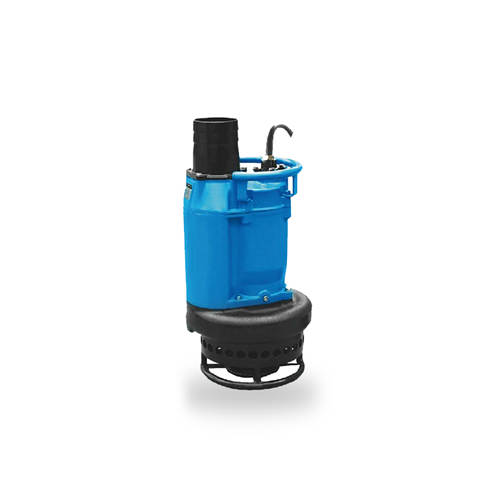
How Do Submersible Slurry Pumps Work?
A submersible slurry pump works by converting mechanical energy into kinetic energy, which moves slurry through its impeller. Here’s the process:
The pump is placed directly in the slurry or submerged liquid.
The motor drives the impeller, which creates centrifugal force.
This force pushes slurry from the pump’s intake to the discharge outlet.
Some models feature an agitator to prevent solids from clogging or settling.
Because the pump is submerged, it eliminates priming issues and allows efficient pumping from deep pits or underwater locations.
Submersible Slurry Pump vs. Dry Slurry Pump
While both pumps are designed for handling slurry, there are key differences:
Submersible Slurry Pump – Works underwater, compact design, no need for priming, lower noise levels, and more energy-efficient in deep slurry applications.
Dry Slurry Pump – Installed outside the slurry, requires suction piping, easier to maintain without removal, but often less efficient for deep pits.
In short, submersible slurry pumps are ideal for underwater or confined spaces, while dry slurry pumps are more suitable when easy maintenance is a priority.
Submersible Slurry Pump Applications
These pumps are versatile and used in multiple industries:
Mining and Mineral Processing – Handling ore, tailings, and mineral slurries.
Dredging and Marine – Removing sand, gravel, or sediments from riverbeds, lakes, and ports.
Construction Sites – Pumping slurry, bentonite, and muddy water in tunneling or foundation work.
Wastewater Treatment – Managing sludge and high-solid content waste.
Power Plants – Transporting fly ash slurry.
Submersible Slurry Pump Maintenance
Regular maintenance extends the pump’s service life and improves efficiency:
Inspect Impellers and Agitators – Replace worn or eroded components to avoid performance loss.
Check Seals and Bearings – Ensure they are intact to prevent water ingress and motor damage.
Monitor Power Consumption – Unusual spikes may indicate clogging or mechanical wear.
Clean Pump Casings – Prevent buildup of solids that reduce efficiency.
Follow Manufacturer Guidelines – Use proper lubricants, parts, and service intervals.
Final Thoughts
A submersible slurry pump is a powerful solution for industries dealing with abrasive, high-solid liquids. By understanding the types, applications, and maintenance requirements, businesses can choose the right pump for their operations. Whether in mining, dredging, or wastewater treatment, these pumps provide reliability, durability, and efficiency in handling the toughest slurry conditions.
198
0
0
All Comments (0)
Previous: None
Next: How Often Should I Inspect My High Pressure Lined Slurry Pump?
If you are interested in sending in a Guest Blogger Submission,welcome to write for us!

Comments